
Founder Q&A: Saana Soppela, Co-founder of Innofend
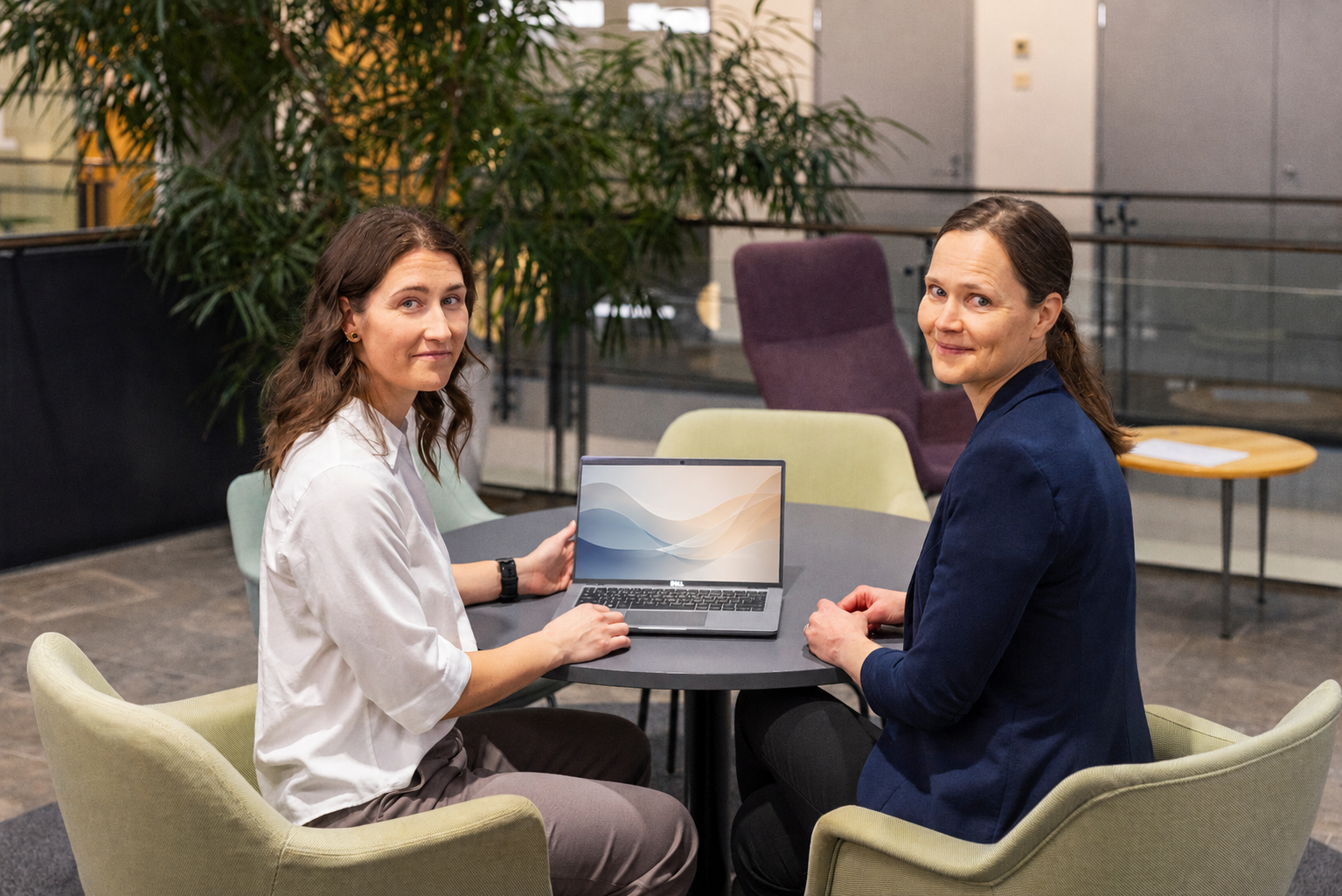
Behind every Health Incubator Helsinki startup is a story of how an idea became a company. In our new series, we give the stage to the founders, who get to share that story in their own words: what they’re building, why, and where they’re heading next. We’re starting with Saana Soppela from Innofend, one of the teams that joined our program in 2025.
1. Hello! Who are you and what does your company do?
“Hi! I’m Saana Soppela, co-founder of Innofend. We’re developing a unique vaccine platform for enteroviruses, a large group of viruses that can cause anything from common childhood infections to severe diseases such as paralysis.
Our technology is based on engineered virus-like particles. They resemble viruses to the immune system, but they do not contain genetic material and therefore cannot replicate or cause infection. With this approach, we aim to enable safe, scalable and broadly applicable vaccine development against enteroviruses.”
2. Where did the idea for Innofend come from?
“My background is in academic research, and the technology behind Innofend traces back to my master’s thesis and later my doctoral thesis at Tampere University.
Early on, the results were already promising enough that my supervisor, now my co-founder and Innofend’s CSO, Adjunct Professor Minna Hankaniemi, and I started thinking this could have potential beyond academia. We decided not to publish everything immediately, because we wanted to protect the intellectual property and continue building stronger evidence.
For several years, we focused on generating the data needed to understand whether the technology could truly become something translational. The results kept becoming more promising, and eventually it became clear that we should file a patent application and take the next step toward commercialization.
Innofend was founded to continue that journey: to take years of vaccine research and develop it into real-world products.”
3. What kind of challenge are you addressing with this technology, and who could benefit from it?
“Enteroviruses are among the most common human viruses. They infect millions of people every year and are especially relevant in children. Most infections are mild, but enteroviruses can also cause severe and sometimes life-threatening diseases, including meningitis, myocarditis and paralysis.
Despite their impact, vaccines are currently available for only a very small fraction of enteroviruses. There are more than 200 known enteroviruses, but most remain without vaccine protection. This is the gap Innofend wants to address. Our long-term goal is to make vaccine development possible for a much broader range of enteroviruses, especially those linked to severe disease and major public health burden.”
4. Why has it been so difficult to develop effective vaccines against enteroviruses?
“There are several reasons. Enteroviruses are a large and diverse group of viruses, so a single traditional vaccine approach is not easy to apply across the whole group. In addition, some enteroviruses have been difficult to produce efficiently with conventional vaccine technologies, which makes development expensive, slow or technically unfeasible.
Another challenge is immunological. Enteroviruses can present the immune system with structures that do not necessarily lead to the most protective response. This means that vaccine design needs to be very precise: it is not enough to simply show the immune system something that looks like the virus; the vaccine needs to guide the immune response toward the right protective targets.
At Innofend, we are developing engineered virus-like particles designed to overcome these challenges.”
5. What makes your approach different?
“Our approach is based on rationally engineered virus-like particles. These particles mimic the structure of enteroviruses, but they are non-infectious because they do not contain viral genetic material.
What makes our platform different is that we can engineer the particles to improve their manufacturability, stability and immunological properties. In practice, this means we are not only trying to copy the virus; we are designing vaccine particles that are better suited for scalable production and protective immune responses.
This is especially important for enteroviruses, where traditional approaches have not been sufficient for most virus types. Our platform has the potential to make vaccine development possible also for enteroviruses where previous methods have fallen short.”

6. What stage are you currently at?
“Innofend is currently in the preclinical stage. The company builds on around ten years of academic research, including extensive work on vaccine design, production, stability and immunological evaluation.
We have strong preclinical proof-of-concept data, peer-reviewed publications and a patent application filed around the core technology. The current focus is on further validating the platform across additional enteroviruses, strengthening the product development path and preparing for the next steps toward clinical translation.
We are also currently raising our first funding round to accelerate this development.”
7. What are the next milestones for Innofend?
“The next major goal is to advance the technology toward clinical trials. There are still important steps before that, including further preclinical validation, manufacturing development and regulatory planning, but the direction is clear.
In the near term, we want to show that our platform can be applied to several of the most medically relevant enteroviruses. In the longer term, our ambition is to build a vaccine platform that could help protect children and vulnerable populations from severe enterovirus-related diseases.”
8. You have now been part of the Health Incubator Helsinki program for about a year. What kind of support has been most valuable to you so far?
“I had entrepreneurial experience before Innofend, but the startup world, especially the life science startup world, was new to me. Health Incubator Helsinki has been a very valuable environment for learning how to build a research-based company.
The webinars and expert sessions have helped me understand topics that are essential for a first-time startup founder, from fundraising and business development to regulatory and commercialization questions. The program has also made networking much easier.
For a deep-tech or life science startup, the right connections matter a lot. We are currently raising our first funding round, and the contacts and visibility gained through the program are already proving useful.”
9. Finally, what advice would you give to other early-stage founders?
“Talk to people! Share what you are working on, and be genuinely curious about what others are doing too.
Especially as a research-based founder, it can be tempting to stay in the lab or wait until the data is complete. But many of the most useful insights come from conversations with people outside your immediate field: investors, clinicians, industry experts, other founders and potential partners.
I have found inspiration, feedback and valuable connections in very unexpected places. So my advice: be open, ask questions and start building your network early.”
Startup Fast Facts
Name: Innofend
Product: A unique vaccine platform for enteroviruses using engineered virus-like particles.
Founded: 2025
Team size: 2
Funding stage: Pre-seed